
Stable Diffusion XL Model or SDXL Beta is Out!
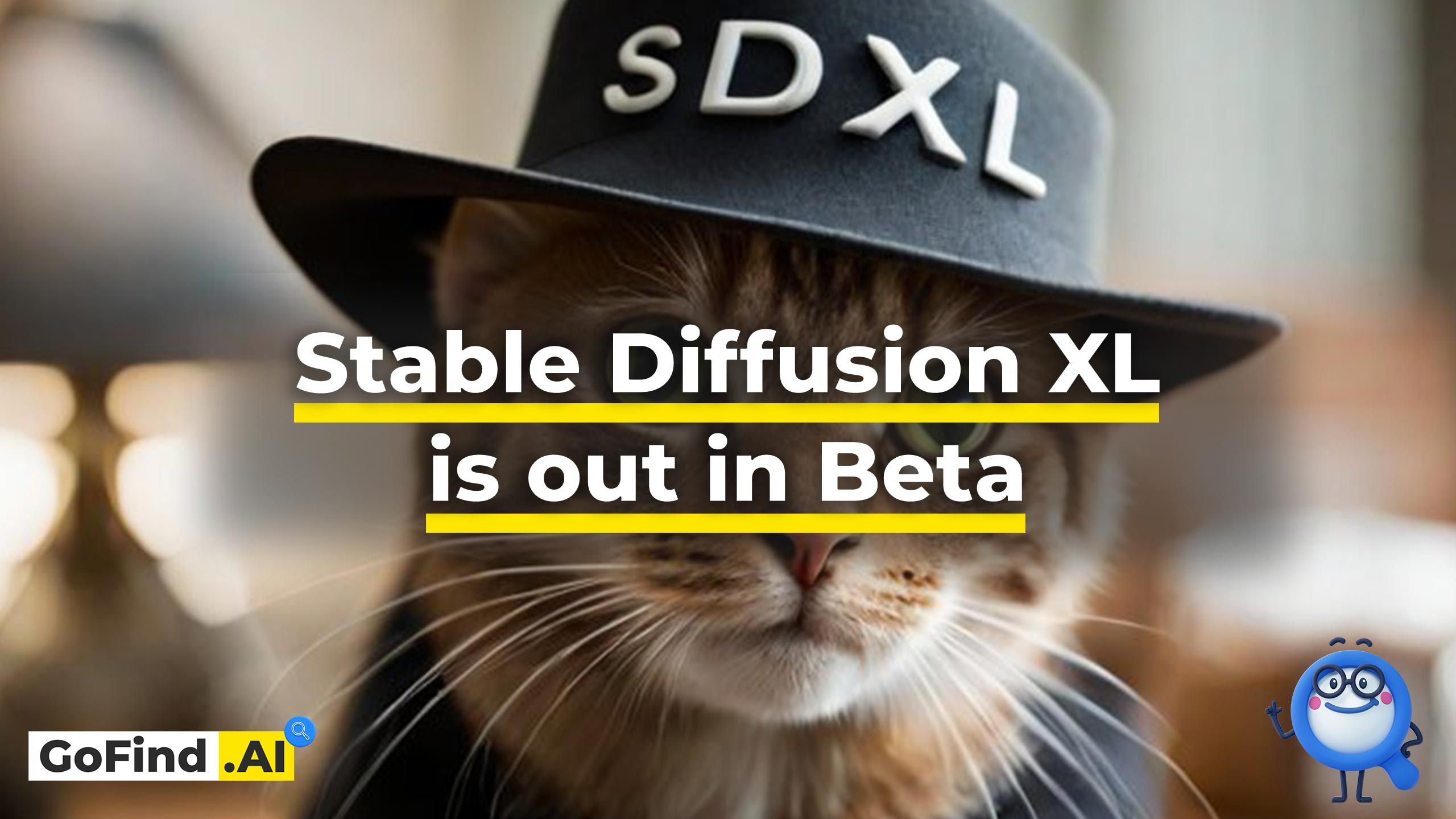
A new beta version of the Stable Diffusion XL model recently became available. The developers at Stability AI promise better face generation and image composition capabilities, a better understanding of prompts, and the most exciting part is that it can create legible text.
Does SDXL deliver on the promise? Is the output really that better?
Let’s learn more and find out!
What is Stable Diffusion XL or SDXL
Stable Diffusion XL model, or SDXL for short, is the latest AI image generation model that is currently in Beta. It’s claimed to have an improved composition and face generation, and it also can generate legible text within the images.
The model has not been released as open source yet, but it is available for Stability AI API customers and DreamStudio users. The former category also includes Nightcafe Studio and Clipdrop apps.
As it’s mentioned in the announcement, Stable Diffusion XL is tuned for better photorealistic images, more eye-pleasing aesthetics, and new capabilities like text generation within images.
Stable Diffusion XL also has the inpainting and outpainting capabilities like all the previous models.
SDXL improvements over older models
Since the model is available for generation, I thought it would be fair to check if the claims are true.
I have tested Stable Diffusion XL and here are the actual improvements and drawbacks that I’ve found:
Legible texts
To my surprise, SDXL does indeed generate legible text! Sure, it’s not always perfect, but even at this level of coherence it’s a breakthrough.
As far as I know, SDXL is the only currently available image generation model that can generate text within image.
We’ve seen some mind-blowing examples from the Deep Floyd IF model, but it still hasn’t been released.
Improved human anatomy and image composition
With SD 2.1 I had to use finetuned models and very long very specific strings of prompts with super detailed negative prompts lists to get humans and objects with correct anatomy and composition.
With SDXL this problem becomes much less of an issue. Stable Diffusion XL can generate much more coherent images of humans. They’re still not perfect, and it’s way too far behind Midjourney, but the progress is significant.
Better prompt understanding
Stable Diffusion XL is much more accurate than the previous models in this regard. Especially compared to v1.5 model. It could consistently ignore parts of the complex prompts before and now it understands much better and generates more detailed results.




References:
Rolletto Casino Bewertung https://s3.amazonaws.com
References:
Tg.Casino Bonus ohne Einzahlung s3.amazonaws.com
References:
Hexabet Casino Einzahlung camslaid.chaturbate.com
References:
Quickwin Casino Bonus forum.wbfree.net
References:
Truefortune Casino App https://www.fapcam.org/external_link/?url=https://syncecard.com/fernefergusson
References:
Novoline Casino Bonus web.gavekal.com
References:
Revolution Casino Login http://bzgm.alafdal.net/go/aHR0cHM6Ly9wdW5iYi5za3luZXR0ZWNobm9sb2dpZXMudXMvdmlld3RvcGljLnBocD9pZD01ODY0NzQ
References:
Iris Casino Login https://auth.globus.org/
References:
Ggbet Casino Bonus ohne Einzahlung https://sites.fastspring.com/gapotchenko/order/contents?catalog=https://zenithgrs.com/employer/beste-krypto-casinos-2026-im-test-und-vergleich/
References:
Clams casino producer 1gocasinotest.onlinespielhallende.workers.dev
References:
Z Casino Black Hawk App http://www.100seinclub.com
References:
Z Casino Black Hawk Test https://pageofjobs.com/employer/ist-instant-casino-in-deutschland-legal/
References:
Nv Casino Login https://montenegro-racing.com/convert/index.php?topic=85326.0
References:
Hexabet Casino Bonus ohne Einzahlung https://www.askmeclassifieds.com/index.php?page=item&id=78904
References:
Fugu Casino Bonus https://cannabisjobs.solutions/companies/beste-online-casinos-in-deutschland-2026-sicher-lizenziert/
Watching a damaged family photo become clear and feel alive again is why our small indie team built mejorar calidad de imagen for Spanish-speaking users. SDXL’s improvements to faces, composition, prompts, and legible text are exciting, though restored text and facial details still deserve careful review.
The ability to generate legible text directly is a welcome addition for rapid concepting. I can see this being a useful starting point for drafting social graphics or title cards when using Planorial, where the initial visual idea often comes from a quick text-to-image prompt before refining the layout and type.
The ability to generate legible text in SDXL is a game-changer for mockups and composite graphics. I’ve been testing it, and while the compositions are strong, the initial outputs often need a resolution and clarity boost to be fully usable in a print or high-res design workflow. I’ve been running the generations through Photo Enhancer Free to sharpen the details and fix minor artifacts before final editing in Photoshop, which saves a lot of manual cleanup time.
The legible text generation is the part I’m most curious about — usually that’s the first thing that falls apart in AI images, so it’ll be interesting to see how the beta holds up in practice for things like mockup graphics and quick social posts. Prompt understanding is nice too, but I mostly care whether it stops mangling hands on the first try.
I’ve been pairing my own AI generations with a free background remover when I need clean cutouts for layouts — dropping an SDXL render onto a transparent background saves me a lot of masking time on quick mockups, and it’s one less step in the workflow when I’m experimenting with prompts.
I think this is among the most imporyant information foor me.
Andd i amm glad reading your article. But should remark
on some general things, The site style is
wonderful, tthe articles is really gdeat : D. Good job, chers xnxx
The legible text generation in the SDXL beta is the part that stands out to me — text has long been one of the weakest spots in image models, so getting prompts to render reliably would be a real shift for anyone making diagrams or labeled figures. Better prompt understanding would matter just as much; vague prompts tending to drift is a familiar frustration.
I work on OnUML, so my own scope is narrower than image generation: rather than prompting for a picture of a diagram, people write it. OnUML’s PlantUML editor lets you edit Mermaid and PlantUML source directly with a live diagram preview alongside, then export or share the result. Worth noting only because if the goal is a precise, editable diagram rather than a rendered image, text-based diagramming is still the more direct route.
SDXL’s progress in composition, prompt understanding, and readable text shows how quickly creative AI is evolving. It’s exciting to see these tools move beyond static image generation into more personal, playful experiences. If you’d like to try a different kind of AI creativity, Bulin 47 AI lets you upload a photo and appear in the viral Bulin 47 x Kevin Wai freestyle video, with Spanish and English support and plans starting at $9.99. https://bulin-47.app
SDXL’s ability to render legible text is an exciting step for AI image generation, though generated lettering can still be imperfect. For designers comparing visual results, it can also be useful to extract text from reference images or PDFs and keep it editable. https://glm-ocr.com is a free online AI OCR tool that extracts text from images and PDFs, converts tables to Markdown and formulas to LaTeX, and supports more than eight languages.
SDXL’s progress in prompt understanding, composition, and even generating readable text is fascinating—especially for anyone following how quickly generative AI tools are evolving. Comparing model demos can be useful, but long videos and walkthroughs often contain more detail than there’s time to watch. I use https://summarizeyoutubevideos.com to turn a YouTube link into a quick AI summary, key points, timestamped chapters, and a full transcript. It’s free, requires no sign-up or plugin, and can also transcribe videos without captions, making it easier to catch the details behind new AI releases.
SDXL’s progress in prompt understanding, composition, and readable text shows how quickly generative AI is evolving. The same momentum is reaching video, where turning a detailed idea or image into a coherent sequence is an exciting next step. Kling 4 is an upcoming model designed around text-to-video and image-to-video creation, with anticipated native 4K, multi-shot editing, multilingual audio, and physically accurate motion. Learn more at https://kling40.org.
SDXL’s progress in prompt understanding, composition, and legible text shows how quickly AI tools are evolving. For anyone exploring the wider AI ecosystem, comparing subscription and API costs can also be useful: https://priceai.io compares official and third-party pricing for services such as ChatGPT, Claude, Gemini, and Grok, with delivery details, availability, and confirmation times to help you make an informed choice.
SDXL’s improvements in prompt understanding, composition, and human anatomy show how quickly image-generation tools are evolving. For a more practical fashion-focused workflow, https://aiclothes.ai lets you upload a person’s photo and a clothing reference—or describe an outfit in text—to preview a generated look. It also offers virtual try-on and pose adjustment, with generations using credits.
SDXL’s progress in composition and prompt understanding is exciting, especially for turning visual ideas into practical design concepts. For room makeovers, https://roomglint.com lets you upload a room photo, choose a style such as Scandinavian, minimalist, or Japandi, and preview a refreshed look while keeping the existing structure. It also offers virtual staging, AI rendering, and garden design—useful ways to explore possibilities before committing to changes. You can try two watermarked images for free when you sign up.
The progress in SDXL’s prompt understanding and image composition is impressive, especially when it comes to creating more coherent visuals. For anyone exploring creative AI workflows, audio can be another useful part of the process: https://vocal-remover.app separates a song into vocal and accompaniment tracks, which you can preview and download. It’s handy for preparing music for edits, demos, or creative projects. After logging in, you get five free standard processing uses every 24 hours, shared with video processing.
SDXL’s progress in prompt understanding, composition, and legible text shows how quickly generative AI is evolving. For a more immersive way to explore AI-generated ideas, https://project-genie.ai lets you create explorable 3D worlds from a text prompt or reference image, then view, adjust, and explore them right in your browser. You can start creating for free and choose between quick drafts and higher-quality generations, with usage based on credits.
SDXL’s improvements in composition, prompt understanding, and legible text show how quickly generative AI is evolving. It’s exciting to see these capabilities extend beyond still images into video, where timing, motion, and sound add new creative possibilities. For creators exploring that next step, https://seedance30.org turns text, images, and audio into cinematic videos, with multi-shot generation and native audio-video synchronization. It’s an independent service, not affiliated with ByteDance or other vendors.
SDXL’s progress in prompt understanding, composition, and readable text shows how quickly generative tools are evolving. It’s also interesting to see how these capabilities may translate from still images to video, where sound and camera movement add new creative possibilities. Veo 4 is still anticipated, but its proposed focus on native audio, 4K upscaling, and cinematic camera control makes it worth keeping an eye on. For an overview and a text-to-video experience entry point, visit https://veo40.net.